
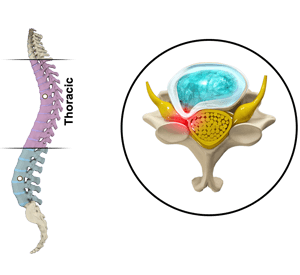
Thoracic myelopathy is a condition in which the spinal cord is compressed in the thoracic spine, the middle part of your back (roughly between your neck and lower back).
What is thoracic myelopathy?
“Myelopathy” means spinal cord dysfunction
“Thoracic” refers to the mid- to upper back
So, thoracic myelopathy = symptoms caused by pressure on the spinal cord in the thoracic spine.
Your spinal cord is like a major communication highway between your brain and body. When it’s compressed, signals don’t travel properly, leading to problems with movement, sensation, and body control.
Why is thoracic myelopathy important?
The thoracic spinal cord controls:
Leg strength and sensation
Balance and walking
Bladder and bowel function
Because the spinal cord (not just a nerve) is involved, symptoms can be serious and progressive if untreated.
Common symptoms
Symptoms often develop gradually and may include:
Back pain (mid or upper back)
Numbness, tingling, or weakness in the legs or feet
Trouble walking, balance problems, or stiffness
Coordination difficulties
Loss of bladder or bowel control (a red flag)
Symptoms vary depending on exactly where and how severely the cord is compressed.
Common causes
Anything that narrows the spinal canal or presses on the cord can cause thoracic myelopathy, such as:
Herniated or bulging discs
Spinal stenosis (narrowing of the canal)
Degenerative changes (spondylosis)
Tumors
Infections or inflammation
Trauma or fractures
Less commonly, neurological diseases
How it’s diagnosed
Clinicians use:
Physical and neurological exams
MRI (most important test)
CT scan or X-rays
Sometimes nerve function tests
Treatment options
Nonsurgical (for mild cases or symptom control)
Physical therapy
Bracing
Pain or anti-inflammatory medications
⚠️ These do not remove the compression, only manage symptoms.
Surgical treatment
Surgery is often recommended when:
Symptoms worsen
Walking or bladder/bowel control is affected
Imaging shows significant spinal cord compression
Surgery aims to decompress the spinal cord and prevent permanent damage.
What happens if it’s not treated?
If untreated, thoracic myelopathy can:
Progress over time
Cause permanent nerve damage
Lead to severe weakness or paralysis
Result in permanent bladder or bowel dysfunction
Early diagnosis and treatment improve outcomes.
When to seek medical care urgently
Get medical attention if you notice:
Worsening walking or balance problems
New leg weakness or numbness
Loss of bladder or bowel control
Rapidly worsening symptoms
In short:
Thoracic myelopathy is a serious condition caused by spinal cord compression in the mid-back that can affect walking, sensation, and organ control. Early evaluation is crucial to prevent permanent damage.