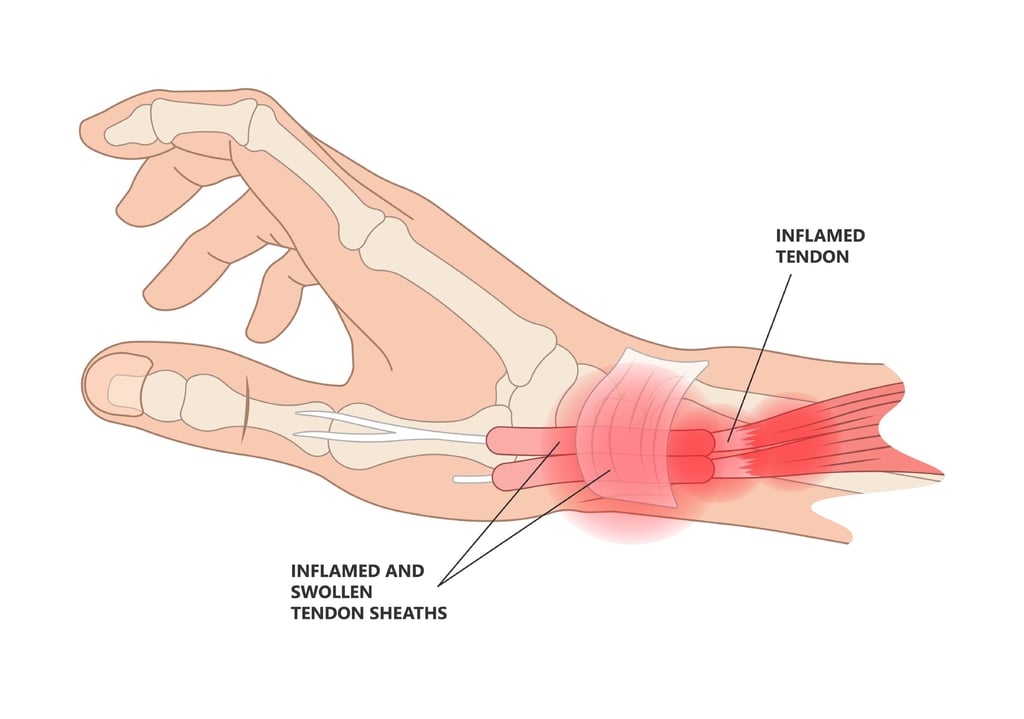
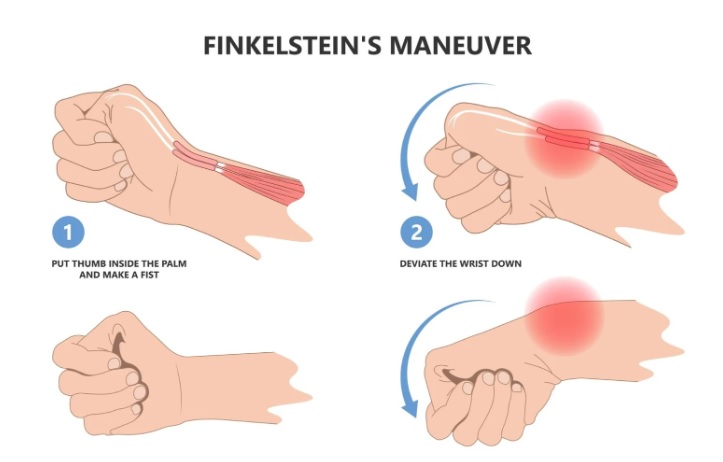
De Quervain tenosynovitis (dih-kwer-VAIN ten-oh-sine-oh-VIE-tis) is a painful condition affecting the tendons on the thumb side of the wrist. If you have de Quervain tenosynovitis, you will probably feel pain when you turn your wrist, grasp anything or make a fist.
Although the exact cause of de Quervain tenosynovitis isn’t known, any activity that relies on repetitive hand or wrist movement — such as working in the garden, playing golf or racket sports, or lifting a baby — can make it worse.
Symptoms
Symptoms of de Quervain tenosynovitis include:
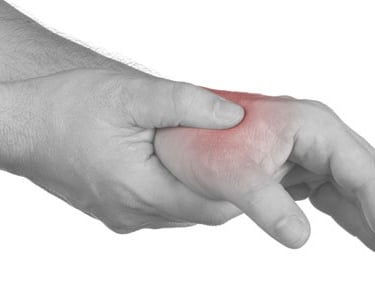
Pain near the base of the thumb
Swelling near the base of the thumb
Difficulty moving the thumb and wrist when doing something that involves grasping or pinching
A “sticking” or “stop-and-go” sensation in the thumb when moving it
Risk factors
Risk factors for de Quervain tenosynovitis include:
Age. People between the ages of 30 and 50 have a higher risk of developing de Quervain tenosynovitis than do people in other age groups, including children.
Sex. The condition is more common in women.
Being pregnant. The condition may be associated with pregnancy.
Baby care. Lifting a child repeatedly involves using the thumbs as leverage and may be associated with the condition.
Jobs or hobbies that involve repetitive hand and wrist motions. These may contribute to de Quervain tenosynovitis.
Assessment: