Stroke or Cerebrovascular Accidents (CVAs)

What Is a Stroke?

A stroke is a medical emergency that happens when blood flow to part of the brain is blocked or when a blood vessel in the brain ruptures. Without oxygen-rich blood, brain cells begin to die within minutes, which can cause permanent brain damage or death.

Strokes are also called cerebrovascular accidents (CVAs) or brain attacks.

Why Strokes Are Dangerous

  • Brain cells die quickly without oxygen

  • Damage can become permanent

  • Fast treatment can save life and brain function

  • Every second matters


Common Stroke Symptoms

Symptoms depend on which part of the brain is affected, but common signs include:

  • Weakness or paralysis on one side of the body or face

  • Trouble speaking or understanding speech (aphasia, slurred speech)

  • Vision problems (blurred or double vision)

  • Sudden confusion or memory loss

  • Severe, sudden headache

  • Dizziness, loss of balance, or coordination problems

  • Nausea, vomiting, seizures, or loss of consciousness


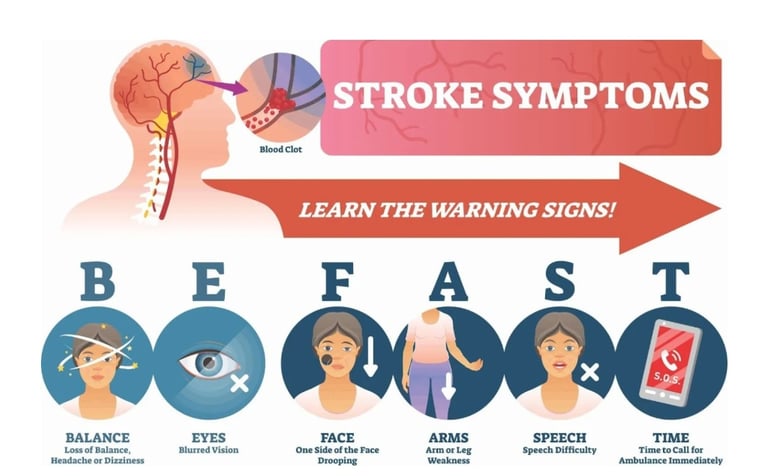
Warning Signs: BE FAST

Use BE FAST to recognize a stroke quickly:

  • Balance – sudden loss of balance

  • Eyes – sudden vision problems

  • Face – face drooping

  • Arms – arm weakness or drifting

  • Speech – slurred or difficult speech

  • Time – call emergency services immediately


❌ DON’Ts

1. ❌ Do NOT Pull the Affected Arm

  • Never lift or turn the patient by the affected arm

  • Avoid pulling during transfers
    ➡ Can cause shoulder subluxation and pain


2. ❌ Avoid Forceful Stretching

  • No jerky or fast movements

  • No pushing into pain
    ➡ Can increase spasticity and cause injury


3. ❌ Do NOT Ignore the Affected Side

  • Don’t let the patient use only the strong side

  • Encourage looking at, touching, and moving the affected side


4. ❌ Avoid Prolonged Poor Positioning

  • No dangling arm unsupported

  • No prolonged wrist/finger flexion

  • No ankle left in plantarflexion (foot drop risk)


5. ❌ No Resistance Exercises Early On

  • Avoid weights or strong resistance

  • Especially if muscle tone is flaccid or just emerging


6. ❌ Don’t Over-Fatigue

  • Stop if:

    • Increased weakness

    • Dizziness

    • Excessive spasticity

    • Pain

Fatigue slows recovery.

Warning Signs – Stop and Seek Medical Advice

  • Sudden increase in weakness

  • Severe shoulder pain

  • New confusion or headache

  • Chest pain or breathlessness

  • Swelling or redness in leg (possible DVT)
Key Principles to Remember

  • Early, gentle, repetitive movement

  • Quality over quantity

  • Use the affected side safely

  • Consistency every day


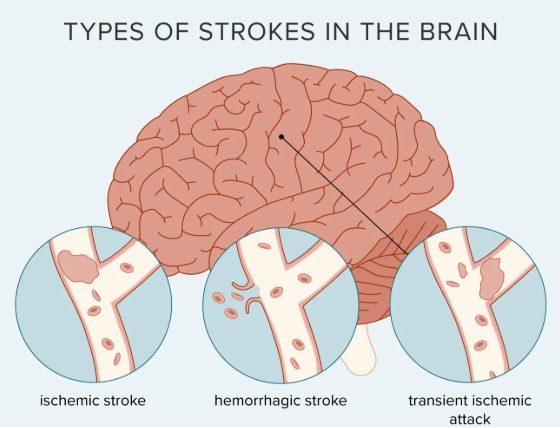
Types of Stroke

1. Ischemic Stroke (Most Common)

Caused by a blood clot blocking a vessel supplying the brain.

Common causes:

  • Atherosclerosis (hardened arteries)

  • Atrial fibrillation

  • Heart defects

  • Clotting disorders


2. Haemorrhagic Stroke

Caused by bleeding in the brain due to a ruptured blood vessel.

Common causes:

  • High blood pressure

  • Brain aneurysm

  • Brain tumors

  • Blood vessel diseases (e.g., Moyamoya disease)


3. Transient Ischemic Attack (TIA)

  • “Mini-stroke”

  • Symptoms are temporary

  • Major warning sign of a future stroke

  • Requires emergency care


Risk Factors

Higher risk if you:

  • Are over 65

  • Smoke or vape

  • Use drugs or excessive alcohol


Medical conditions increasing risk:

  • High blood pressure

  • High cholesterol

  • Diabetes

  • Migraines

  • COVID-19

  • Heart conditions


Diagnosis

Doctors diagnose strokes using:

  • Neurological exams

  • CT scan or MRI

  • Blood tests

  • EKG / EEG


Treatment

Treatment depends on stroke type and severity:

Ischemic Stroke

  • Clot-busting drugs (thrombolytics)

  • Mechanical thrombectomy

  • Blood pressure control


Haemorrhagic Stroke

  • Medications to stop bleeding

  • Blood pressure management

  • Surgery to reduce brain pressure


Stroke Rehabilitation

Recovery often requires:

  • Physical therapy

  • Occupational therapy

  • Speech therapy

  • Cognitive rehabilitation

Rehab helps regain skills or adapt to changes.

Recovery & Prognosis

  • Recovery varies from person to person

  • Many recover over months

  • Faster treatment = better outcomes

  • Ischemic strokes usually have better survival than haemorrhagic strokes


Stroke Prevention

You can lower your risk by:

  • Eating healthy

  • Exercising regularly

  • Controlling blood pressure, cholesterol, and diabetes

  • Quitting smoking

  • Seeing your doctor regularly


When to Go to the ER

Call emergency services immediately if:

  • You notice stroke symptoms

  • Symptoms return after a stroke

  • You have signs of complications (chest pain, breathing trouble, seizures)


Questions to Ask Your Doctor

  • What type of stroke did I have?

  • Will I have long-term effects?

  • What rehab do I need?

  • What signs of another stroke should I watch for?


2. Passive & Assisted Range of Motion (ROM)

Performed slowly, pain-free, 1–2 times/day.

Upper Limb

  • Shoulder flexion, abduction, external rotation

  • Elbow flexion/extension

  • Forearm pronation/supination

  • Wrist and finger extension (important to prevent flexor tightness)


Lower Limb

  • Hip flexion/extension, abduction

  • Knee flexion/extension

  • Ankle dorsiflexion/plantarflexion

👉 Move all joints, not just the paralyzed ones.

3. Early Active or Active-Assisted Exercises (as soon as possible)

Even minimal effort counts.

  • Shoulder shrugs

  • Scapular protraction/retraction

  • Assisted reaching

  • Assisted hip and knee bending

  • Ankle pumps


Use:

  • The unaffected hand to assist the affected hand

  • Therapist or caregiver assistance


4. Bed Mobility & Postural Control

  • Rolling side to side

  • Bridging (lifting hips)

  • Supported sitting at edge of bed

  • Weight shifting in sitting

These are functional exercises that speed recovery.

5. Sensory Stimulation

  • Light touch, tapping, brushing

  • Joint compression (gentle)

  • Different textures (cloth, sponge)

Helps brain re-mapping (neuroplasticity).

6. Breathing Exercises

  • Deep breathing

  • Incentive spirometry (if available)

  • Assisted coughing

Prevents chest infections.

7. Short, Frequent Sessions

  • 10–20 minutes

  • 2–4 times/day

  • Rest between exercises

Fatigue is common after stroke.

Goals of the Initial Phase (first days–weeks)

  • Prevent joint stiffness, contractures, and shoulder subluxation

  • Maintain range of motion

  • Promote early activation of the affected side

  • Improve postural control and bed mobility

  • Prevent complications (pressure sores, chest infection, DVT)


✅ DO’s

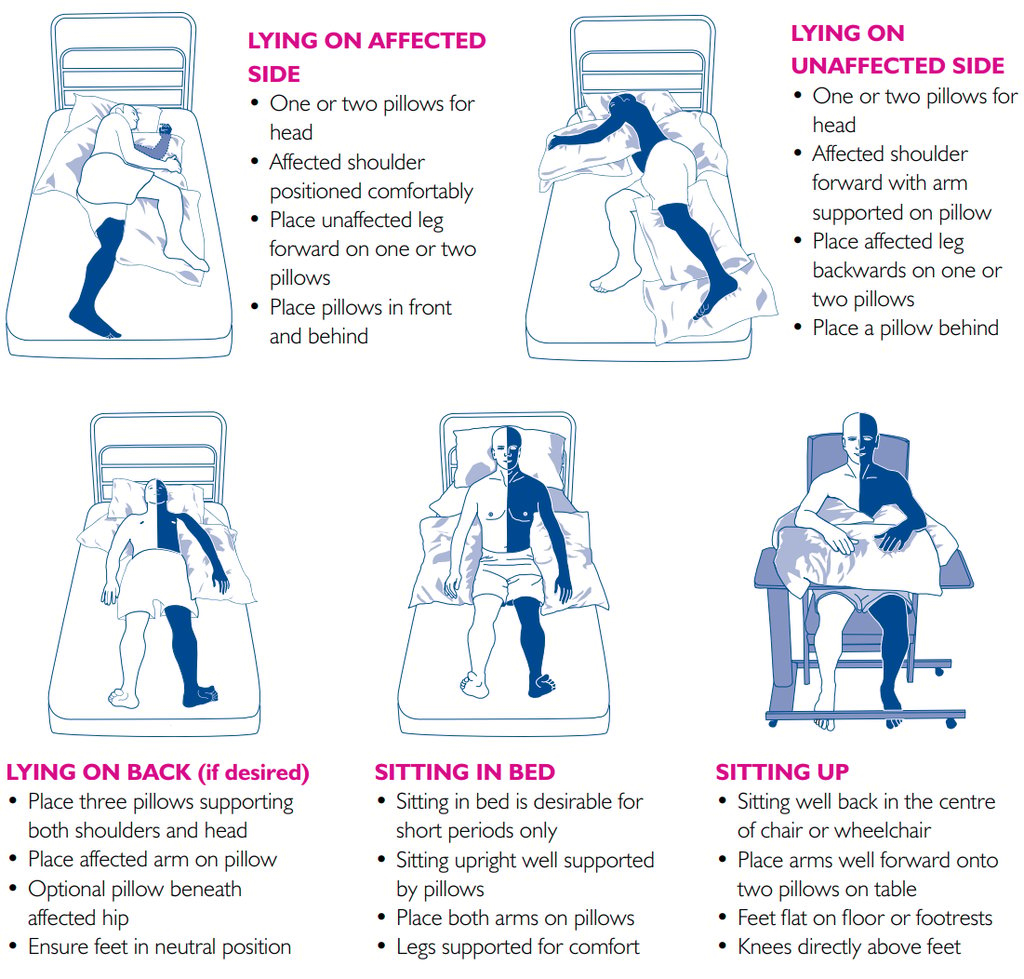
1. Positioning (VERY IMPORTANT)

Proper positioning should be done 24 hours/day.

In bed:

  • Keep the affected shoulder supported (pillow under arm, shoulder slightly forward)

  • Affected arm:

    • Shoulder slightly abducted and externally rotated

    • Elbow extended

    • Wrist neutral

    • Fingers gently extended

  • Affected leg:

    • Hip neutral/slight flexion

    • Knee slightly flexed

    • Ankle supported in neutral (foot board or pillow)


Side-lying on affected side (if tolerated):

    • Encourages weight bearing and sensory input

    • Affected shoulder positioned forward (not underneath the body)

2. Passive & Assisted Range of Motion (ROM)

Performed slowly, pain-free, 1–2 times/day.

Upper Limb

  • Shoulder flexion, abduction, external rotation

  • Elbow flexion/extension

  • Forearm pronation/supination

  • Wrist and finger extension (important to prevent flexor tightness)


Lower Limb

  • Hip flexion/extension, abduction

  • Knee flexion/extension

  • Ankle dorsiflexion/plantarflexion

👉 Move all joints, not just the paralyzed ones.

3. Early Active or Active-Assisted Exercises (as soon as possible)

Even minimal effort counts.

  • Shoulder shrugs

  • Scapular protraction/retraction

  • Assisted reaching

  • Assisted hip and knee bending

  • Ankle pumps


Use:

  • The unaffected hand to assist the affected hand

  • Therapist or caregiver assistance


4. Bed Mobility & Postural Control

  • Rolling side to side

  • Bridging (lifting hips)

  • Supported sitting at edge of bed

  • Weight shifting in sitting

These are functional exercises that speed recovery.

5. Sensory Stimulation

  • Light touch, tapping, brushing

  • Joint compression (gentle)

  • Different textures (cloth, sponge)

Helps brain re-mapping (neuroplasticity).

6. Breathing Exercises

  • Deep breathing

  • Incentive spirometry (if available)

  • Assisted coughing

Prevents chest infections.

7. Short, Frequent Sessions

  • 10–20 minutes

  • 2–4 times/day

  • Rest between exercises

Fatigue is common after stroke.

❌ DON’Ts

1. ❌ Do NOT Pull the Affected Arm

  • Never lift or turn the patient by the affected arm

  • Avoid pulling during transfers
    ➡ Can cause shoulder subluxation and pain


2. ❌ Avoid Forceful Stretching

  • No jerky or fast movements

  • No pushing into pain
    ➡ Can increase spasticity and cause injury


3. ❌ Do NOT Ignore the Affected Side

  • Don’t let the patient use only the strong side

  • Encourage looking at, touching, and moving the affected side


4. ❌ Avoid Prolonged Poor Positioning

  • No dangling arm unsupported

  • No prolonged wrist/finger flexion

  • No ankle left in plantarflexion (foot drop risk)


5. ❌ No Resistance Exercises Early On

  • Avoid weights or strong resistance

  • Especially if muscle tone is flaccid or just emerging


6. ❌ Don’t Over-Fatigue

  • Stop if:

    • Increased weakness

    • Dizziness

    • Excessive spasticity

    • Pain

Fatigue slows recovery.

Warning Signs – Stop and Seek Medical Advice

  • Sudden increase in weakness

  • Severe shoulder pain

  • New confusion or headache

  • Chest pain or breathlessness

  • Swelling or redness in leg (possible DVT)


Key Principles to Remember

  • Early, gentle, repetitive movement

  • Quality over quantity

  • Use the affected side safely

  • Consistency every day