
What Is Cauda Equina Syndrome?
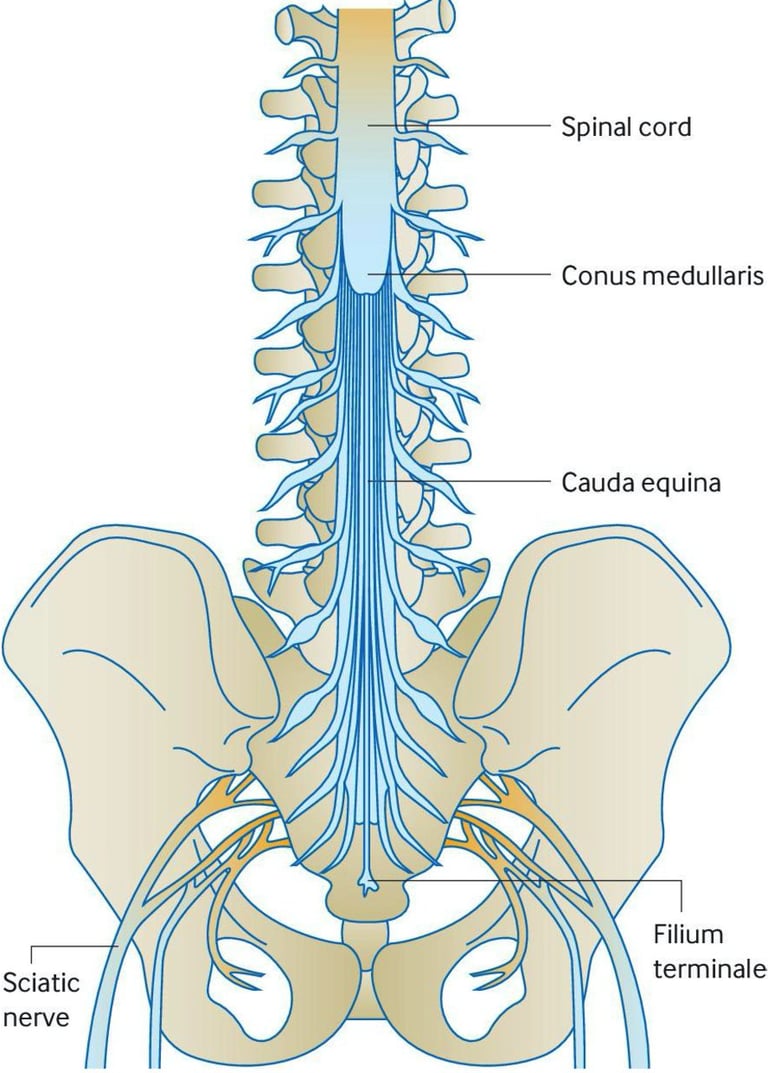
Cauda equina syndrome (CES) occurs when a bundle of nerve roots at the lower end of the spinal cord—called the cauda equina—becomes compressed. These nerve roots control movement and sensation in the legs, as well as bladder, bowel, and sexual function.
Nerves transmit electrical signals throughout your body, much like power lines deliver electricity to homes and businesses. If a fallen tree limb compresses a power line, electrical service is disrupted. Emergency crews must quickly remove the obstruction to prevent damage or danger. Similarly, when the cauda equina nerves are compressed, urgent medical treatment—often surgery—is needed to relieve pressure and prevent permanent injury.
When compressed, the cauda equina nerves can cause pain, weakness, numbness, and problems with bladder or bowel control. If symptoms are not treated promptly, cauda equina syndrome can lead to permanent nerve damage, including paralysis. Surgery is the primary treatment.
The term cauda equina is Latin for “horse’s tail,” which describes the shape of this bundle of nerve roots.
Is Cauda Equina Syndrome a Medical Emergency?
Yes. Cauda equina syndrome is a medical emergency and requires immediate care. Although it is not life-threatening, delayed treatment can result in permanent disability. Surgery performed as soon as possible offers the best chance of recovery and symptom improvement.
Types of Cauda Equina Syndrome
There are two main types:
Incomplete Cauda Equina Syndrome (CES-I)
This form causes reduced sensation or urgency in the bladder and bowels. You may not feel the need to urinate or have a bowel movement. About 40% of people with CES have this type.
Complete Cauda Equina Syndrome (CES-R)
This form causes urinary and/or bowel retention or incontinence. Retention means you cannot urinate or have a bowel movement, while incontinence means you cannot control these functions. Approximately 60% of people with CES experience this type.
How Rare Is Cauda Equina Syndrome?
Cauda equina syndrome is rare. Experts estimate it affects 1 in 30,000 to 100,000 people worldwide each year. It occurs in about 3% of lumbar disc herniation cases.
Symptoms and Causes
Symptoms of Cauda Equina Syndrome
Symptoms may include:
Lower back pain and/or leg pain (sciatica)
Weakness in one or both legs
Numbness or abnormal sensations (burning, tingling, prickling) in the buttocks, hips, inner thighs, or backs of the legs
Loss of bladder or bowel control
Difficulty starting or stopping urination (urinary retention)
Seek emergency medical care immediately if you experience any of these symptoms.
Can You Walk With Cauda Equina Syndrome?
It depends on the severity of your symptoms. Some people can walk normally, while others may have difficulty due to leg weakness, numbness, or loss of coordination.
What Causes Cauda Equina Syndrome?
Cauda equina syndrome occurs when something compresses the nerve roots at the bottom of the spinal cord (L1–L5).
The most common cause is a herniated lumbar disc.
Other causes include:
Infections (such as epidural abscess, discitis, or meningitis)
Lower back trauma or injury
Lumbar spinal stenosis
Complications following lumbar spine surgery
Spinal epidural hematoma or hemorrhage
Tumors or other spinal lesions
Complications
If treatment is delayed or not provided, cauda equina syndrome can cause permanent nerve damage, leading to:
Sexual dysfunction
Permanent loss of bladder or bowel control
Partial or complete paralysis of the legs
Diagnosis and Tests
How Is Cauda Equina Syndrome Diagnosed?
A healthcare provider will diagnose CES through:
A physical exam
A neurological exam
Review of your medical history
Your provider may assess your ability to:
Stand, sit, and walk
Walk on your heels and toes
Bend and change positions
Lift your legs while lying down
These tests help evaluate your strength, sensation, reflexes, posture, and range of motion. A rectal exam may also be performed to assess anal muscle tone.
Diagnostic Tests
Imaging tests used to confirm cauda equina syndrome include:
Magnetic resonance imaging (MRI)
Computed tomography (CT) scan
Myelogram
Classification
Cauda equina syndrome may be classified as:
Acute CES
Symptoms begin suddenly and worsen rapidly. Emergency surgery is usually required within 24–48 hours.
Chronic CES
Symptoms develop gradually or persist over time. In some cases, permanent nerve damage may already be present.
Management and Treatment
How Is Cauda Equina Syndrome Treated?
Acute cauda equina syndrome requires emergency surgery, most often a lumbar laminectomy, to remove the source of nerve compression.
After surgery, your provider may recommend:
Medications to improve bladder or bowel function
Self-catheterization if needed
Physical therapy to regain strength and mobility
Occupational therapy to help with daily activities
Recovery Timeline
Recovery varies from person to person. Some sensation may return soon after surgery, while bladder or bowel control may take months—or longer—to improve. Your healthcare provider will guide you through recovery expectations and next steps.
Outlook and Prognosis
Life Expectancy
Cauda equina syndrome does not reduce life expectancy, but it can significantly affect quality of life. Early treatment is critical.
Long-Term Outlook
Prompt surgery may prevent permanent nerve damage. However, nerve damage that has already occurred cannot be reversed. Long-term rehabilitation is often necessary to manage pain, weakness, or incontinence.
Living with complications such as loss of bladder or bowel control or sexual dysfunction can be emotionally challenging. Stress, anxiety, and depression are common. Support from healthcare providers, mental health professionals, and support groups can be very helpful.
Prevention
While not all cases can be prevented, you may reduce your risk—especially of disc herniation—by:
Avoiding high-heeled shoes that strain spinal alignment
Stopping tobacco use
Strengthening core and back muscles
Lifting heavy objects properly (bend knees, keep your back straight)
Maintaining good posture
Stretching regularly, especially after prolonged sitting
Living With Cauda Equina Syndrome
When to Seek Medical Care
Go to the emergency room immediately if you experience:
Sudden or worsening lower back pain
Difficulty urinating or having a bowel movement
Trouble walking
Numbness in the buttocks or upper thighs
Early treatment greatly reduces the risk of permanent complications.
Questions to Ask Your Healthcare Provider
What type of cauda equina syndrome do I have?
Is it acute or chronic?
How urgently do I need surgery?
How long will the surgery and hospital stay last?
What caused my condition?
Do I have a herniated disc?