
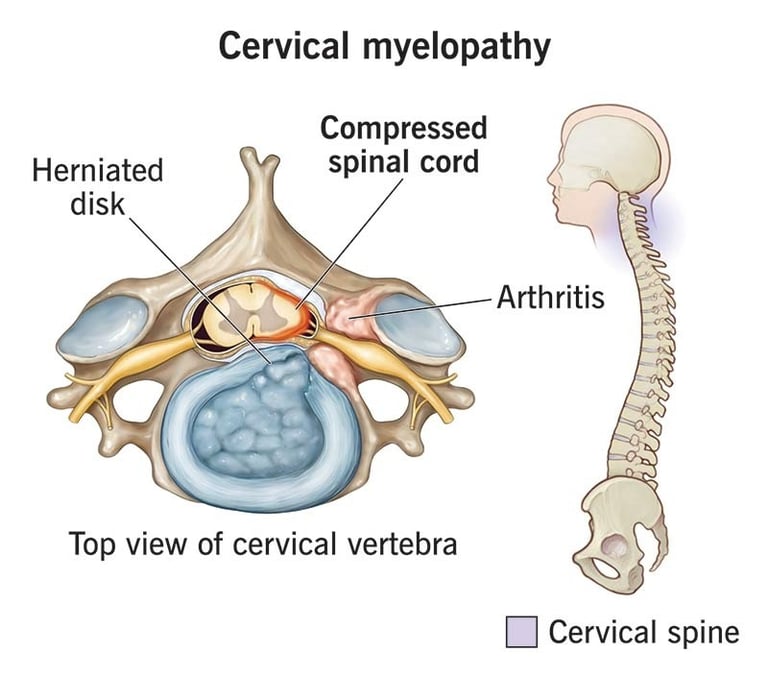
Cervical myelopathy is a condition where the spinal cord is compressed in the neck (cervical spine). Because the spinal cord carries signals between your brain and the rest of your body, this compression can cause pain, weakness, numbness, balance problems, and difficulty using your hands or walking.
What’s happening? (In simple language)
Something is pressing on your spinal cord in your neck
That pressure interferes with nerve signals going to your arms, hands, and even your legs
Common causes
Age-related wear and tear (the most common)
Bone spurs
Herniated discs
Narrow spinal canal (sometimes present from birth)
Arthritis (including rheumatoid arthritis)
Spinal injuries or trauma
Tumors
Most common type
Cervical spondylotic myelopathy (CSM)
Caused by degeneration of the spine as you age
Discs thin, ligaments stiffen, bones change shape
These changes narrow the spinal canal and compress the spinal cord
Common symptoms
Persistent neck pain or stiffness
Numbness or tingling in hands and arms
Weakness in hands or arms
Trouble with fine motor skills (buttoning clothes, writing)
Balance problems or difficulty walking
In severe cases: bowel/bladder issues or paralysis
Why legs can be affected
Even though the problem is in your neck, the spinal cord controls your whole body, including your legs—so compression higher up can disrupt signals going downward.
How it’s diagnosed
Physical and neurological exams
Imaging tests such as MRI, X-ray, CT scan, or myelogram
Treatment options
Nonsurgical (for mild cases):
Neck brace
Physical therapy
Medications (NSAIDs, steroids, pain relievers)
Surgery (often recommended for moderate to severe cases):
Removes pressure from the spinal cord
May involve disc removal, bone removal, or spinal fusion
Surgery does not reverse aging, but it can stop progression and prevent permanent damage
Why treatment matters
If untreated, cervical myelopathy can worsen over time and lead to:
Permanent nerve damage
Severe pain
Loss of mobility
Paralysis
Prognosis
Mild cases may remain stable or improve with treatment
Severe cases can cause irreversible damage if not treated early
Life expectancy is usually not affected, but quality of life can be