Aggravating Factors
Prolonged sitting or standing
Transitioning from sitting to standing
Climbing stairs
Bending forward or twisting
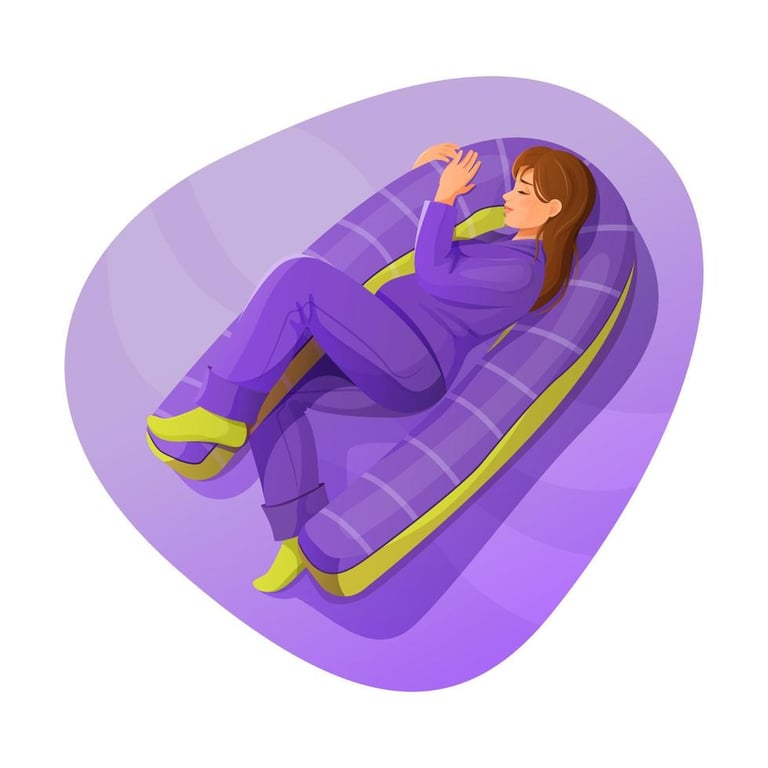
Sleeping on the affected side
During menstruation
Other Features
Morning stiffness lasting more than one hour
Feeling of instability, weakness, or leg buckling
Stiffness after prolonged rest or inactivity
Causes & Risk Factors
Trauma: Falls, road traffic accidents, or direct pelvic injuries
Muscle imbalances: Weak core, gluteal, or pelvic stabilisers
Leg length discrepancy
Pregnancy and childbirth: Hormonal laxity and increased pelvic load
Repetitive strain: Occupations or sports involving repetitive loading
Obesity: Increased mechanical stress on the SI joints
Underlying conditions:
Osteoarthritis
Inflammatory arthritis
Diagnosis
Diagnosis is primarily clinical, based on:
Blood test: Your clinician might request for Blood test if any Rheumatoid Arthritis or Inflammatory Arthritis is suspected to rule out ankylosing spondylitis.
Imaging (X ray/MRI) can be considered if any Sacroiliitis is suspected.
Treatment Options
First-Line (Conservative Management)
Patient education and activity modification
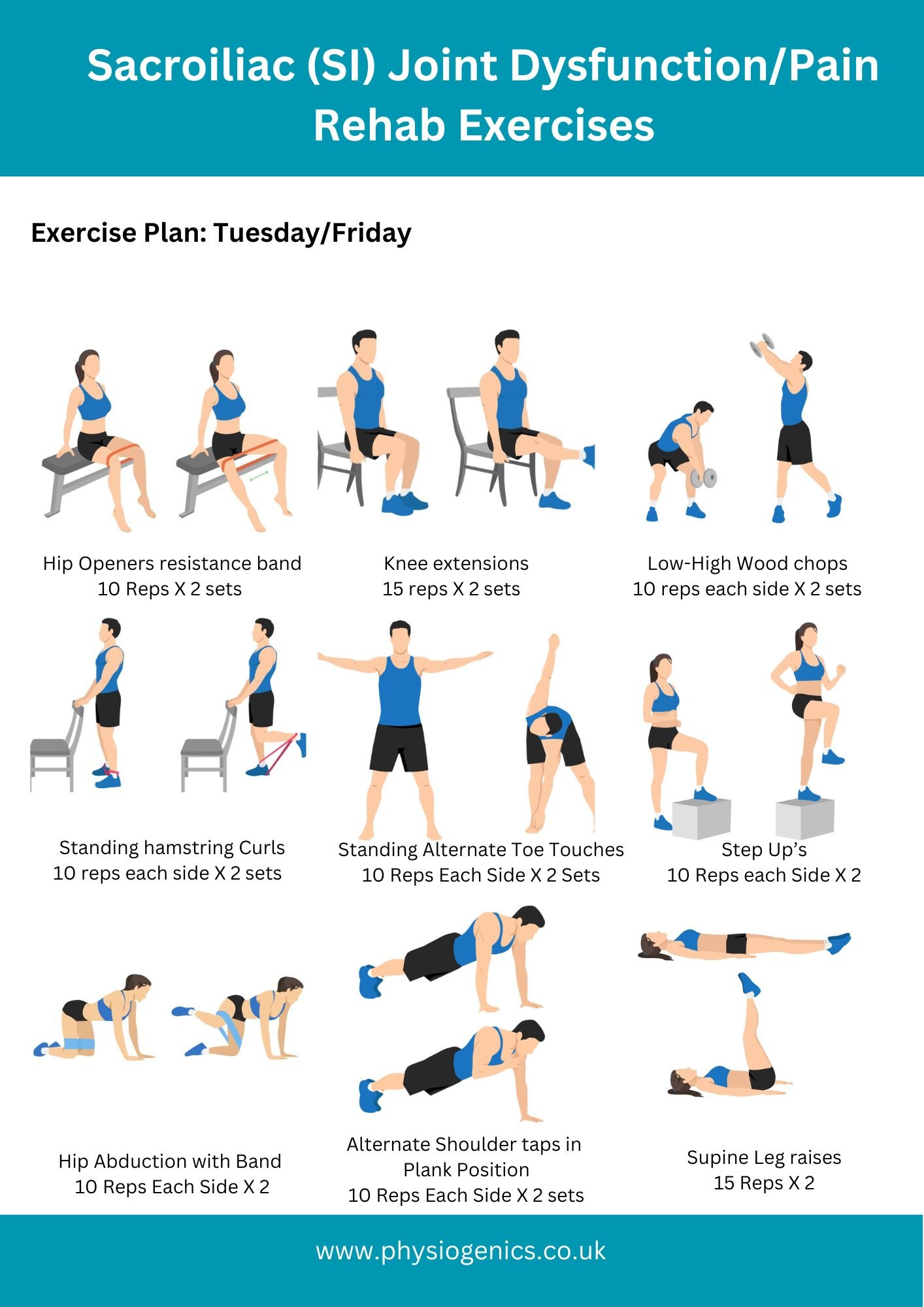
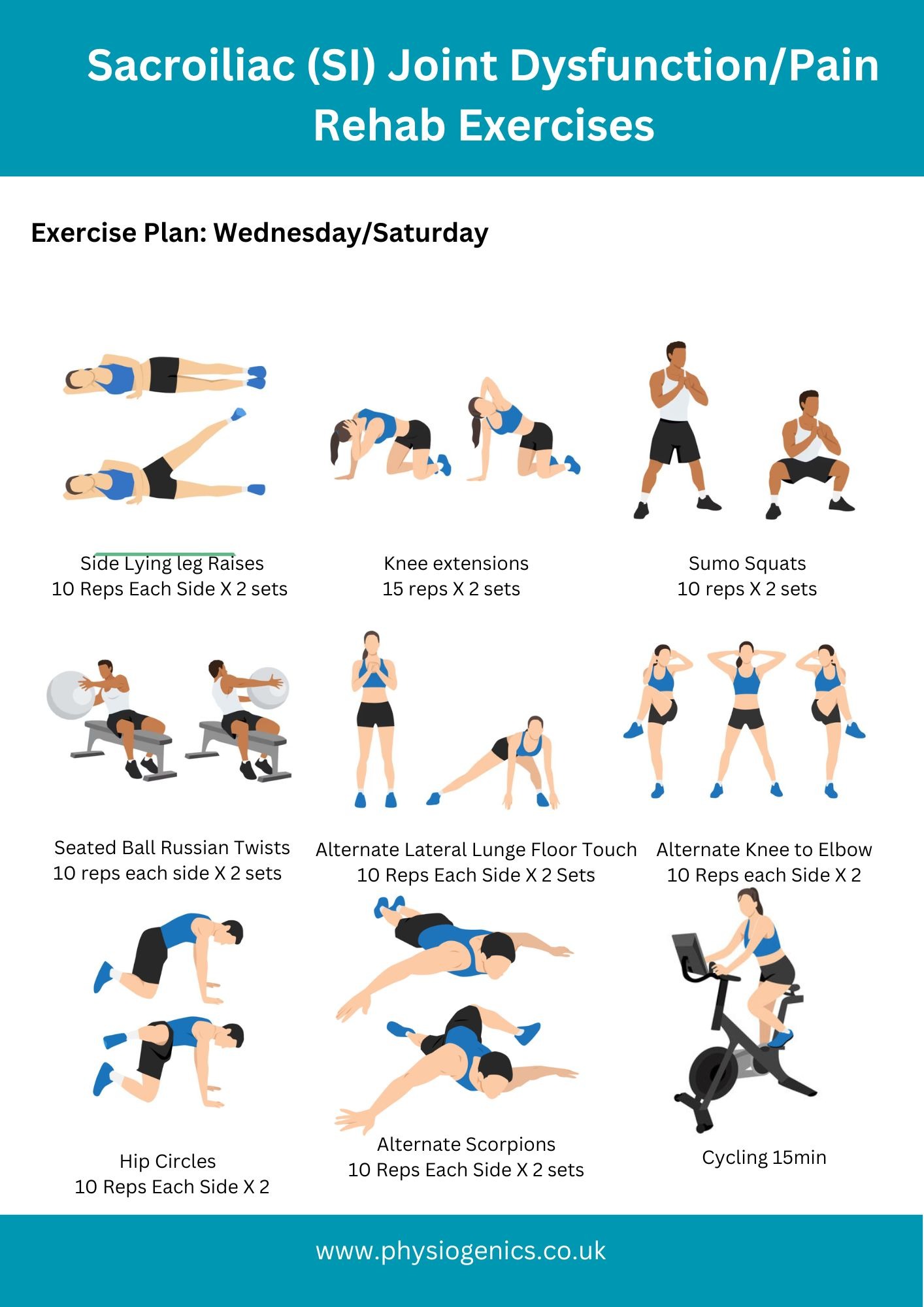
Physiotherapy:
Pelvic stabilisation belts (selected cases)
Anti-inflammatory medications (as prescribed)
Hot water bottle/Topical pain relief gel for relaxing muscles.
Soft Tissue Release or massage help in reducing secondary muscle stiffness.
Advanced Treatments (If Symptoms Persist)
Surgical Treatment: SI joint fusion (arthrodesis): Rare and reserved for severe, refractory cases where conservative and interventional treatments fail
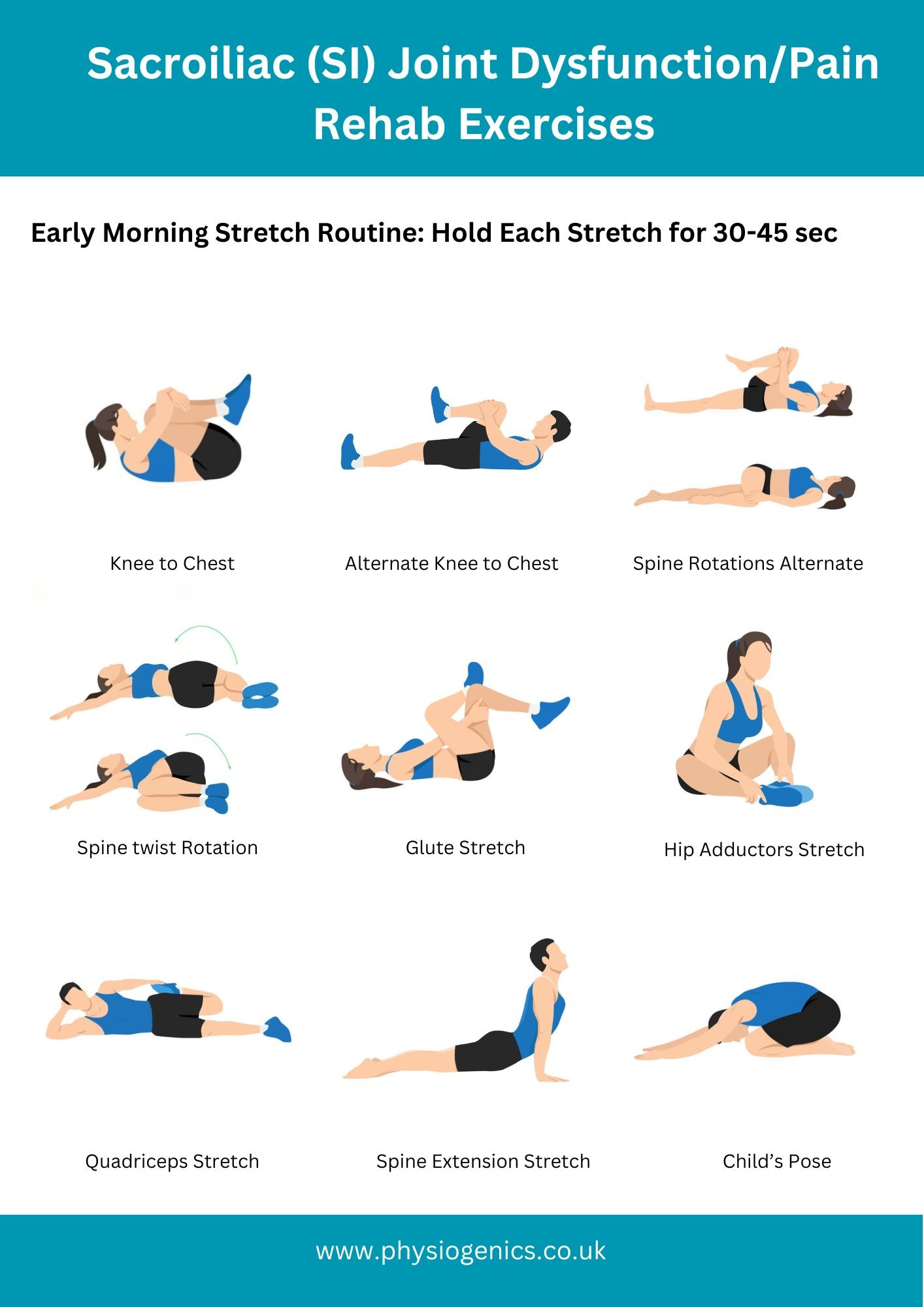
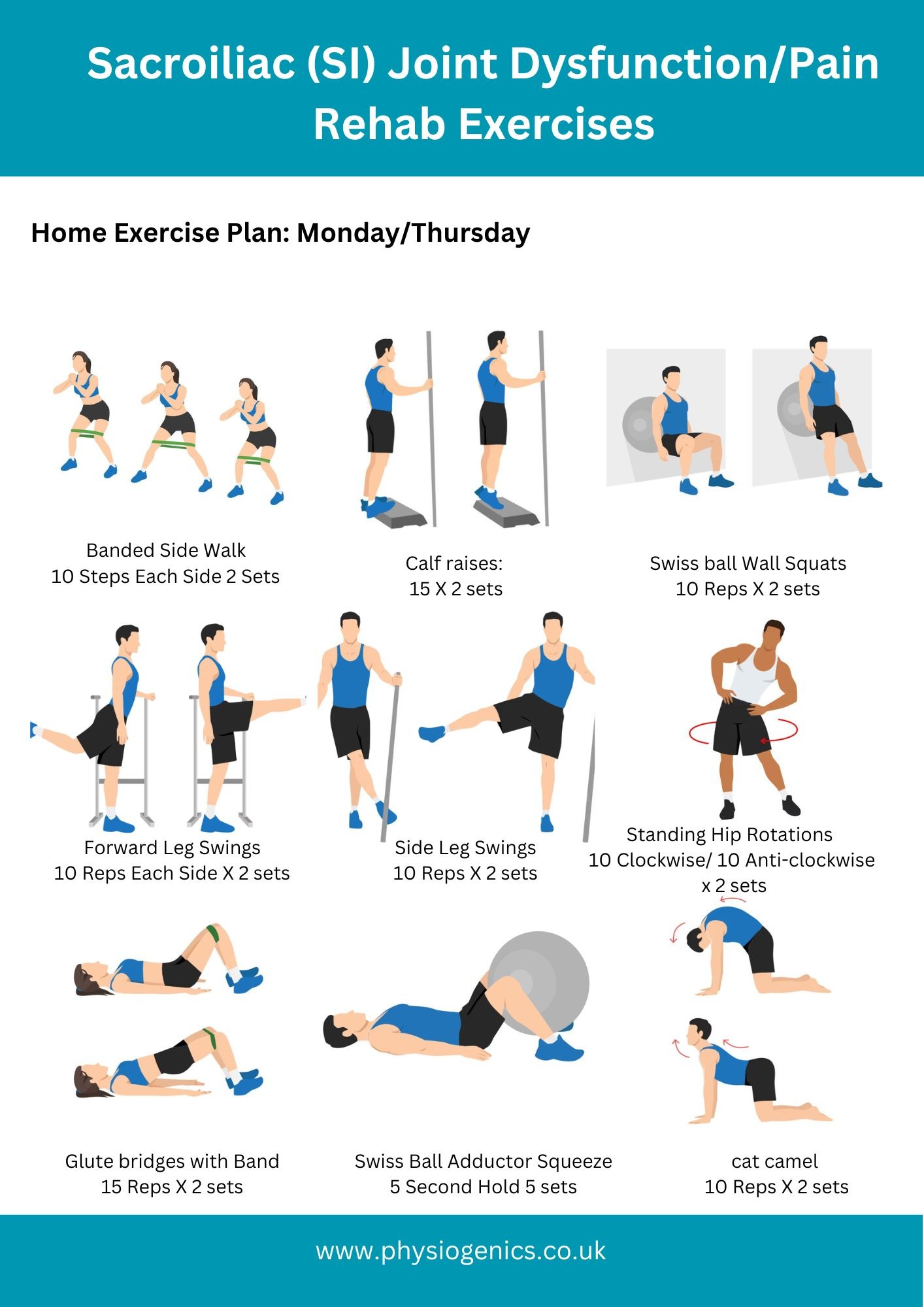
Physiotherapy Rehab Exercises